Energy transition
Three Pathways to the Energy Transition and Decarbonization

The world is facing calls to address worsening climate change, which is driven by global warming and other factors.
Meanwhile, global demand for electricity is expected to rise, with rapid advances in AI fueling the construction of new data centers and semiconductor plants, along with the accelerating electrification of transportation. At the same time, recent energy crises and growing supply chain risks tied to dependence on specific countries have reaffirmed the importance of energy security.
How can we ensure a stable energy supply with decarbonization?
There is no single solution, the ideal would be to expand the adoption of renewable energy while maintaining a well-balanced power generation mix that avoids overreliance on any single energy source or fuel.
Based on our concept of a “realistic energy transition” that promotes steady decarbonization while making effective use of existing infrastructure, Mitsubishi Power continues to pursue cutting-edge technologies at the forefront of global power generation, delivering innovative products and services.
Building on this experience, we will work together with partners around the world to help realize a carbon-neutral society.
Three Approaches to Decarbonizing Power Generation
Mitsubishi Power offers multiple paths toward promoting decarbonization while utilizing existing infrastructure.
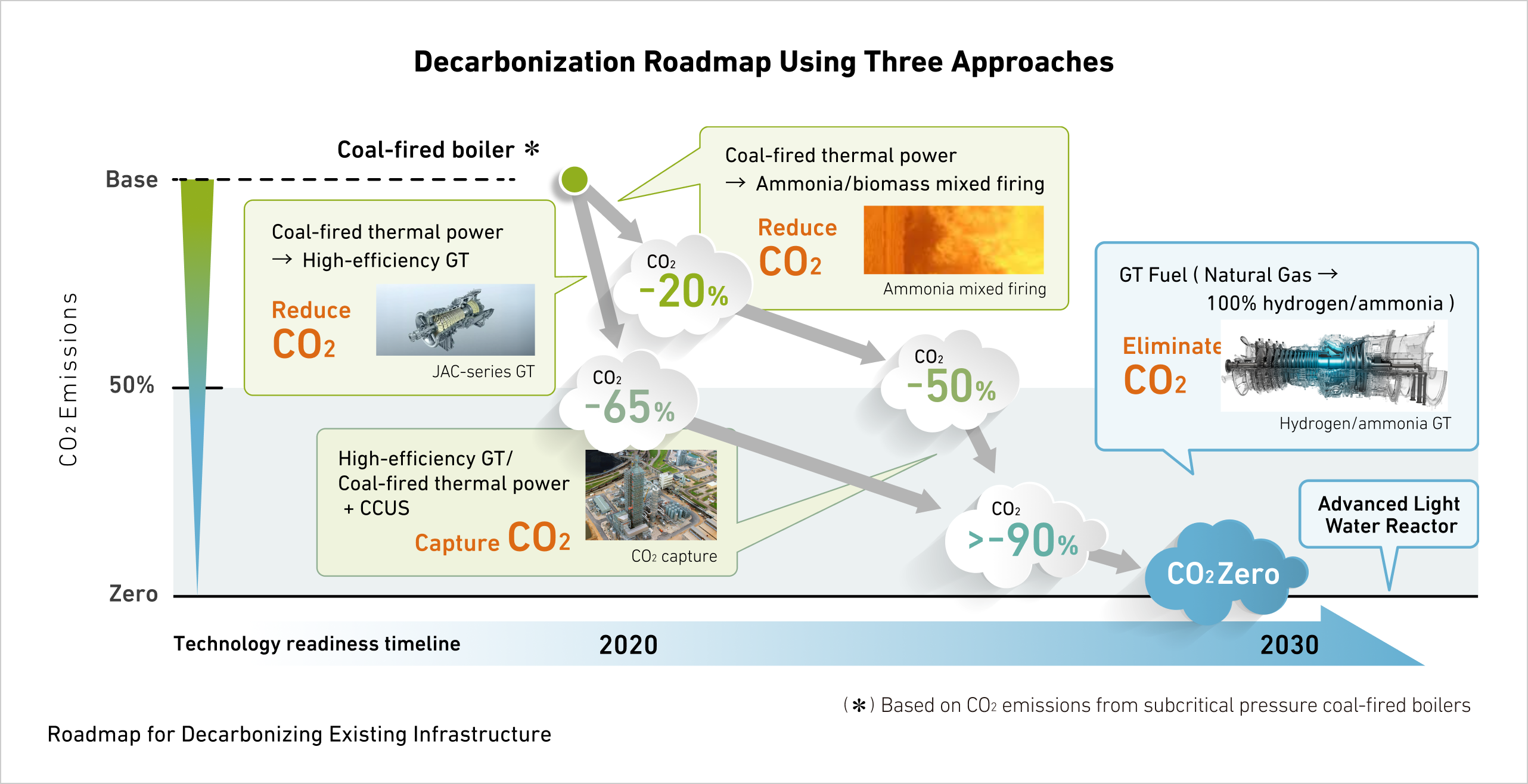
Taking into account the customer’s facilities and fuel criteria, we combine three approaches – reducing, capturing, and eliminating CO₂ – to provide practical solutions for an energy transition.
Reducing CO₂

The first approach toward decarbonizing power generation is to reduce CO₂ emissions by improving generating efficiency and introducing lower-carbon fuels, while making effective use of existing infrastructure.
Upgrading aging thermal power plants to high-efficiency gas turbine combined cycle (GTCC) systems enables the same amount of electricity to be generated with less fuel, lowering CO₂ emissions. In particular, GTCC systems equipped with the latest JAC gas turbines, which are among the most efficient in the world, can reduce CO₂ emissions by approximately 65% compared with conventional coal-fired power plants.
In addition, using a mix of ammonia and biomass with coal-fired power plants provides a solution to decarbonize existing facilities over time.
Capturing CO₂

The CO₂ capture approach significantly reduces emissions by separating and capturing CO₂ from the exhaust gases of gas turbines and coal-fired power plants, and storing it underground.
MHI Group offers proprietary CO₂ capture technology and holds the world’s -leading market share in high-efficiency CO₂ capture systems from various emission sources, including power plants. As this technology can capture more than 90% of CO₂ emissions, it can help reduce emissions when integrated with a GTCC power plants.
Implementing CO₂ capture requires the establishment of legal and regulatory frameworks. By closely monitoring the trends in each country and region, as well as the development status of transportation and storage infrastructure, we provide practical options for advancing decarbonization throughout the energy transition period.
Explore Related Case Studies and Materials
Eliminating CO₂

The “Eliminating CO₂” approach seeks to get rid of CO₂ emissions during power generation by converting gas turbine fuel from natural gas to hydrogen or ammonia. Because this transition can be achieved primarily by modifying combustors and fuel supply system of existing gas turbines, it offers the benefit of minimizing additional capital investment.
Since the mid-2010s, Mitsubishi Power has been developing large-capacity, high-efficiency gas turbines that use hydrogen as a fuel source, and we have now advanced to the verification and demonstration stage. Our technological development is steadily advancing so that our gas turbines can play a central role when the hydrogen-based society arrives in the future.
Development Bases Advancing the Energy Transition
Mitsubishi Power has established an integrated development framework in Japan that not only conducts research into decarbonization technologies but also accelerates their implementation in society.
By refining elemental technologies at Nagasaki and conducting long-term integrated demonstration under actual operating conditions at Takasago, we are collecting data on reliability and operations essential for the energy transition.
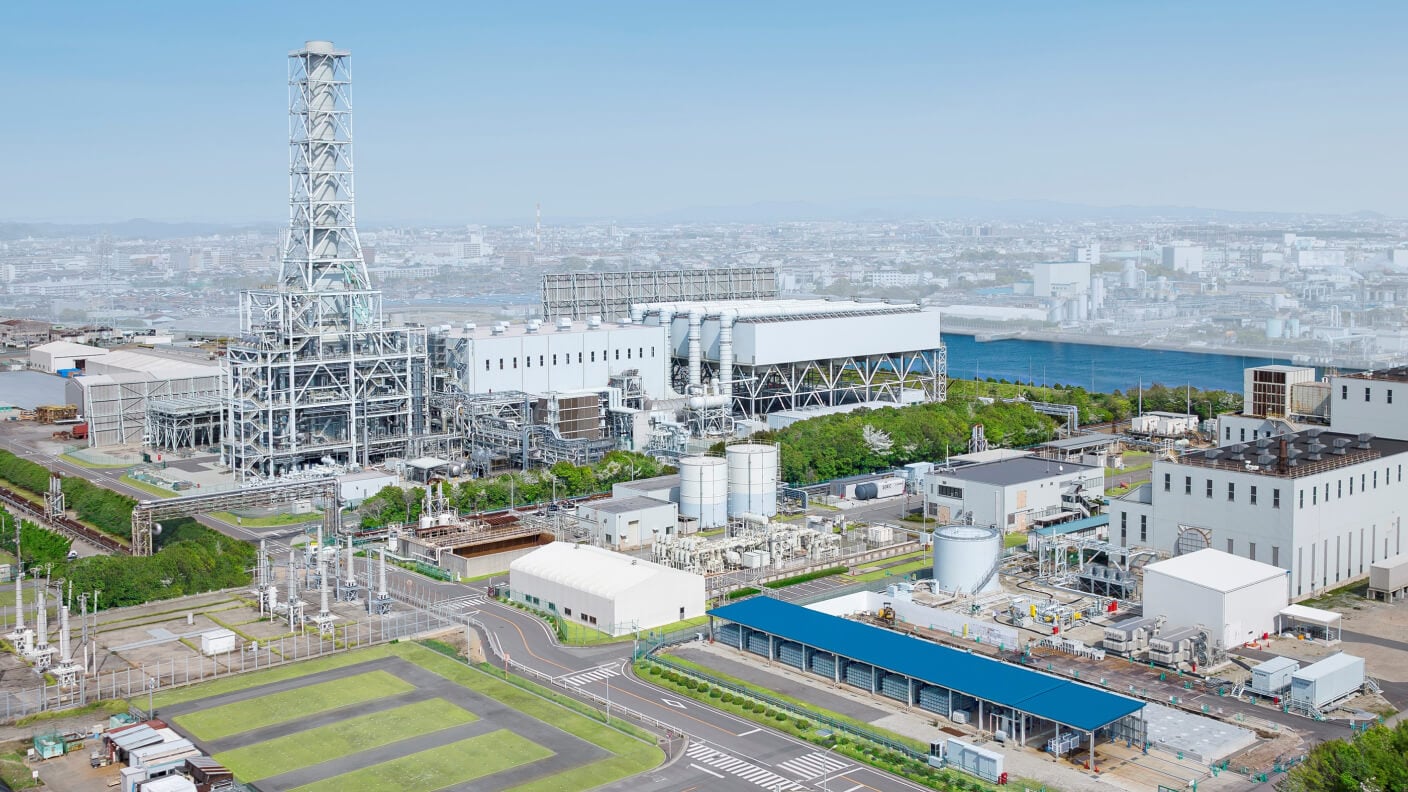
Takasago Hydrogen Park: World’s First Hydrogen Production and Power Generation Demonstration Facility
In 2023, Mitsubishi Power began full-scale operation of the Takasago Hydrogen Park. Located at Takasago Machinery Works, our center for R&D, design, manufacturing, and validation of gas turbines, it is the world’s first complex for full-chain validation of hydrogen technologies, from production to power generation.
The main focus of Takasago Hydrogen Park is to enhance product reliability through technology verification, while also supporting the societal implementation of hydrogen power generation and production technologies. We have established three dedicated areas focused on hydrogen production, storage, and utilization (power generation), and we conduct a wide range of validation and demonstration tests.
Nagasaki Carbon Neutral Park: Central Base for Energy Decarbonization Technology Development
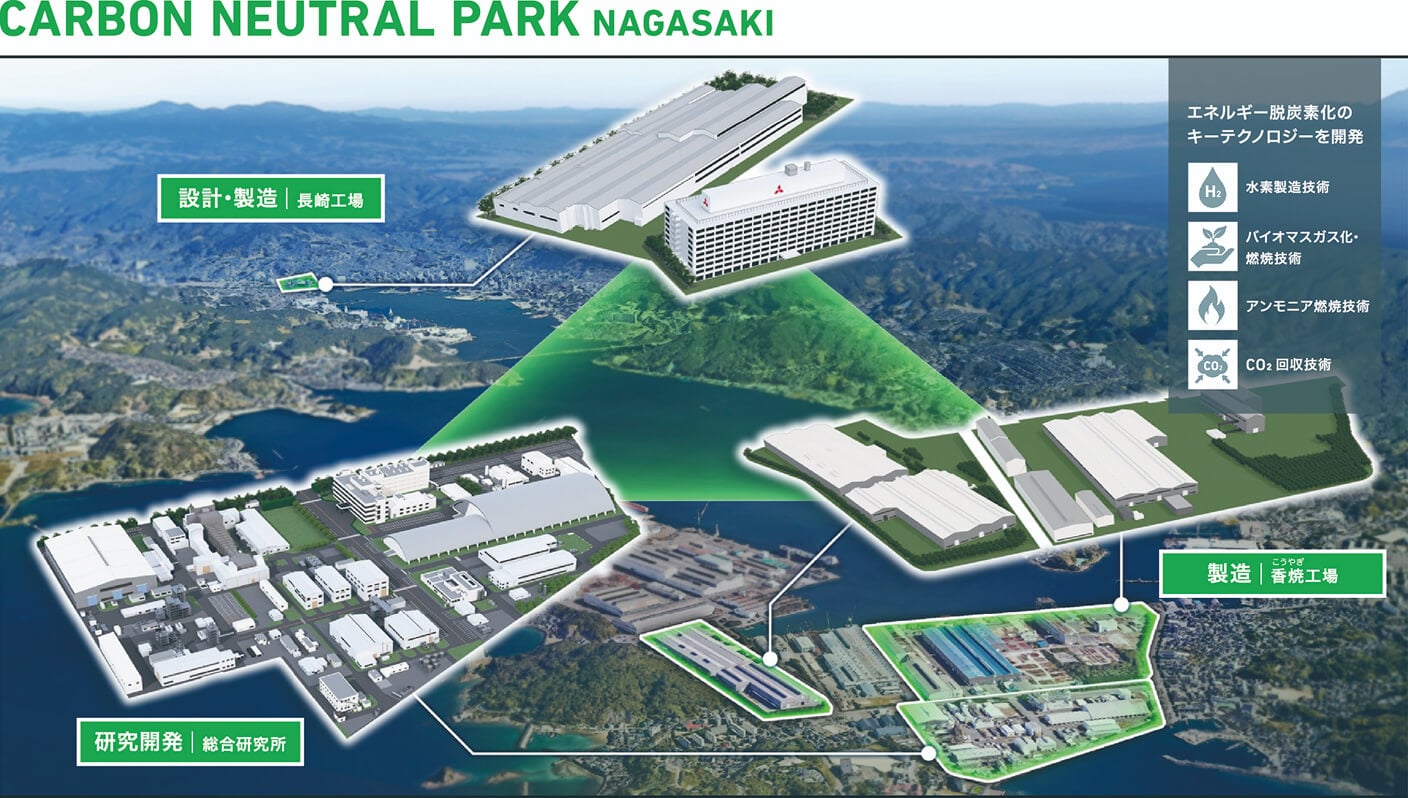
Nagasaki Carbon Neutral Park, which began operations in 2023 within the Nagasaki Shipyard & Machinery Works and the Nagasaki District Research & Innovation Center, serves as the core base for development of elemental technologies for energy decarbonization.
Along with the hydrogen production technologies demonstrated at Takasago Hydrogen Park, it conducts R&D on elemental technologies concerning ammonia combustion, CO₂ capture, and biomass synthetic fuel production. Leveraging the thermal energy system design and manufacturing capabilities cultivated over many years, the park will accelerate R&D toward product commercialization. and business viability.
Takasago Hydrogen Park & Nagasaki Carbon Neutral Park Initiative to Create a Decarbonized World
Here we offer an explanation of the roles of the Takasago Hydrogen Park and Nagasaki Carbon Neutral Park, along with an overall view of decarbonization technology development at both centers from a technical perspective.
Mitsubishi Power Initiatives and Results
We are taking on initiatives to advance decarbonization step by step while making effective use of existing infrastructure.
Here we present our key initiatives and results toward achievement of a carbon-neutral society, from testing at demonstration facilities to deployment at commercial facilities and large-scale projects.
Successfully Operates a Grid-Connected Advanced Class Gas Turbine with 30% Hydrogen Fuel Co-Firing
Japan | T-Point 2
In 2023, at a GTCC power plant validation facility (T-Point 2, rated output: 566 MW) within the Takasago Hydrogen Park, which is connected to the local power grid, we successfully conducted a demonstration test using an advanced-class M501JAC gas turbine with a fuel mixture of 30% hydrogen (by volume) and natural gas.
The demonstration verified stable combustion and low nitrogen oxide (NOx) performance during partial-load and full-load operation, and that switching fuels from natural gas to hydrogen fuel blending is possible. The results symbolize the advancement of hydrogen co-firing technology as a practical option for decarbonization of power generation.
Explore This Case Study
Advanced Clean Energy Storage project, starting with 30% hydrogen co-firing and aiming for 100% hydrogen firing by 2045
U.S. | Advanced Clean Energy Storage project
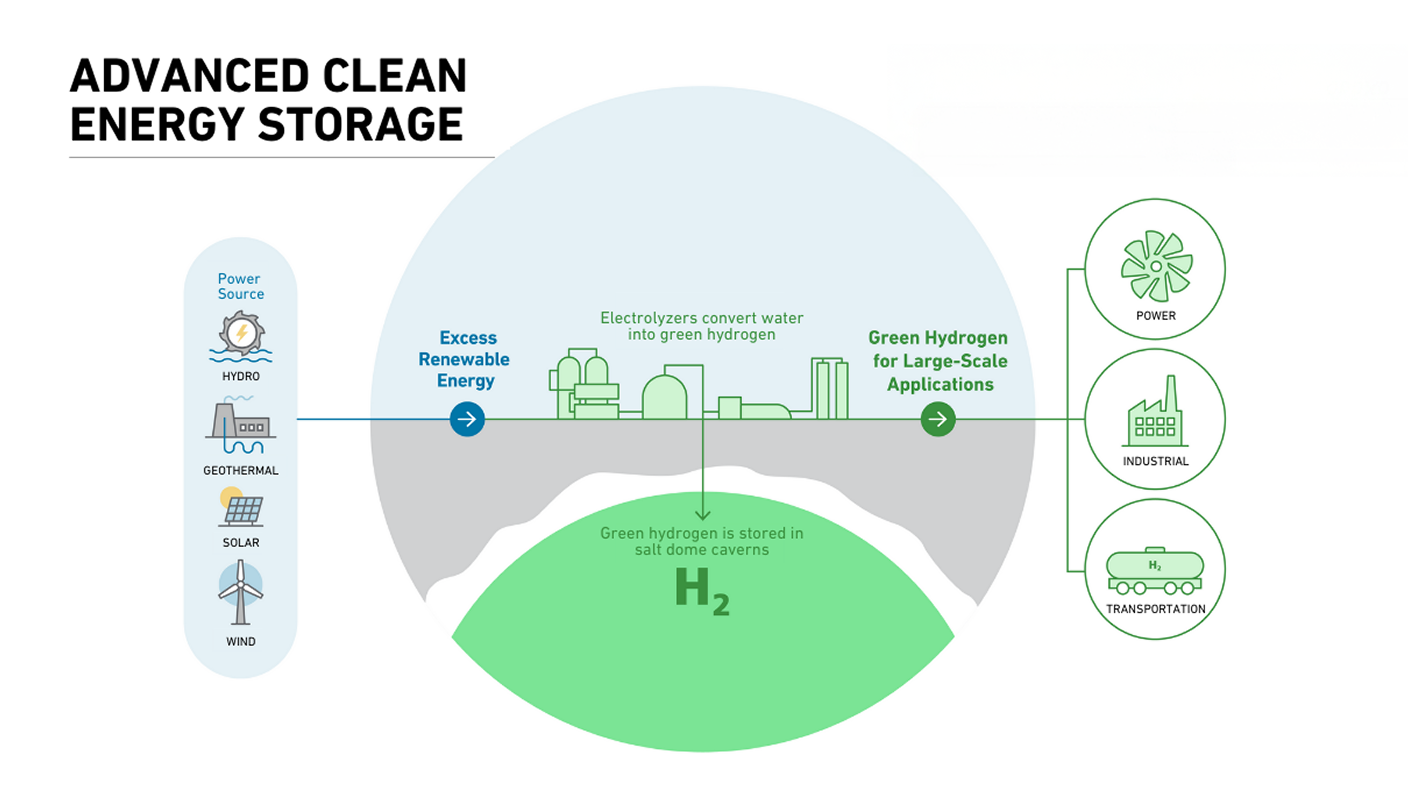
The Advanced Clean Energy Storage project produces clean hydrogen by using renewable energy sources such as wind and solar power to electrolyze water, stores the hydrogen in large underground salt caverns, and supplies it as needed for power generation. The latest 840 MW class GTCC plant supplied by Mitsubishi Power is scheduled to begin initial co-firing with a 30% clean hydrogen mix, with a gradual increase in the hydrogen ratio. The plan is to increase to 100% clean hydrogen by 2045.
As a pioneering initiative in MHI’s Energy Transition strategy, this project represents a large-scale value chain in the United States to produce, store, transport and use hydrogen. Drawing on the technology and expertise gained through this project, MHI Group will continue to contribute to decarbonization efforts worldwide.
Explore This Case Study
Successful 50% hydrogen co-firing demonstration at a commercial large gas turbine
U.S. | Plant McDonough-Atkinson
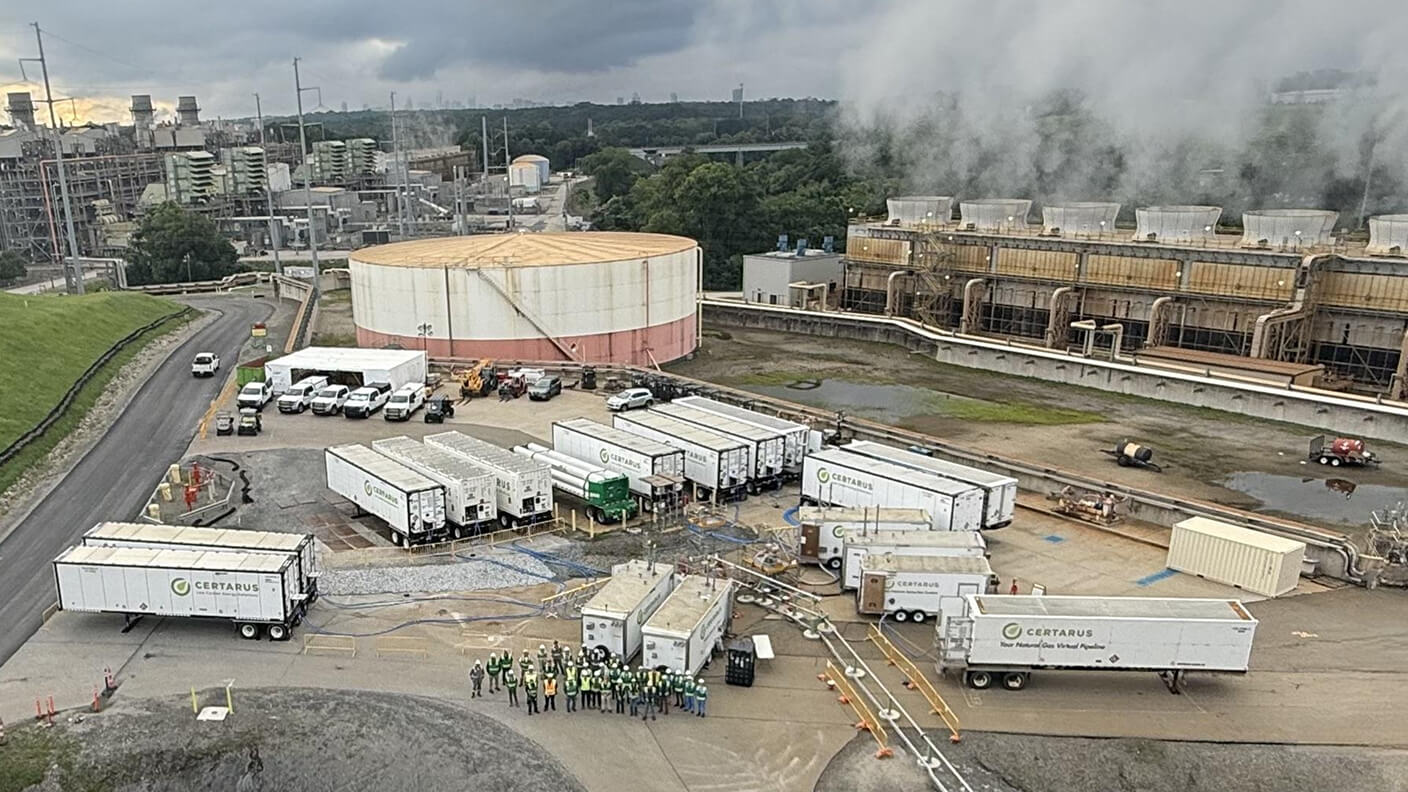
Mitsubishi Power and Georgia Power have successfully completed a test for combustion using a 50% hydrogen blend at both partial and full load on an M501GAC natural gas turbine at Georgia Power’s Plant McDonough-Atkinson in Smyrna, Georgia.
The demonstration is the first to validate 50% hydrogen fuel blending on an advanced class gas turbine, and it is the largest test of its kind in the world The use of 50%* hydrogen fuel blending providing an approximately 22% reduction in CO₂ emissions compared to 100% natural gas.