M501J/JAC Series
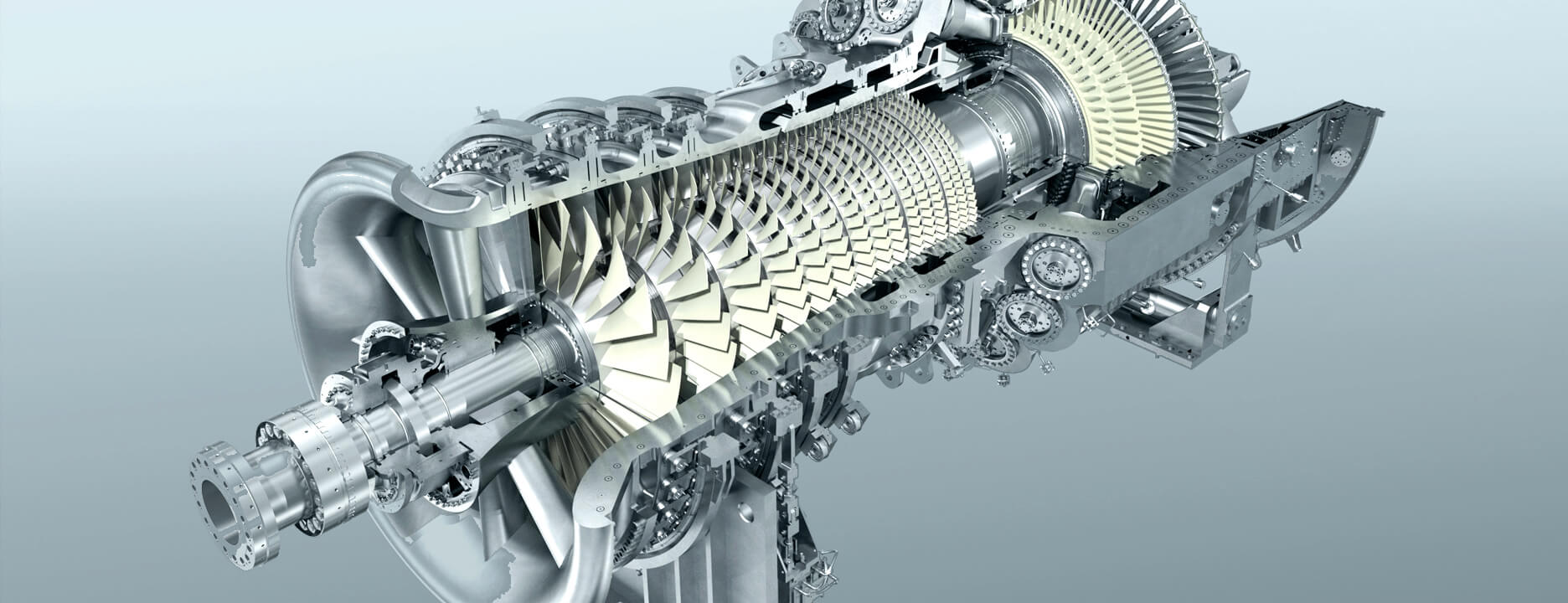
Cutting-edge large-capacity gas turbines for 60 Hz power generation
incorporating state-of-the-art technologies
Features
- Standalone Gas Turbine Output
- 453 MW class
- Combined Cycle Output
- 664 MW / 1,332 MW class
- Combined Cycle Efficiency
- More than 64%
- Total commercial operating hours
-
Over 3.2 million hours
- J Series as of December 2025
- World-class combined cycle efficiency of over 64%.
- High reliability with cumulative commercial operation time exceeding 3.2 million hours.
- 30% hydrogen co-firing has been demonstrated, supporting the transition to carbon neutrality.
- Reduces CO₂ emissions by approximately 65% compared to conventional coal-fired power plants.
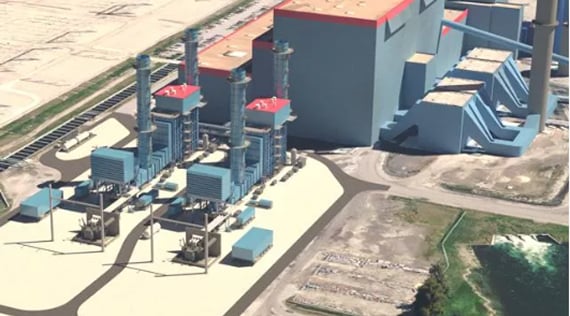
Shifting from Coal to Natural Gas, Creating a New Model for Sustainable Power Generation
In December 2020, Mitsubishi Power received an order for two M501JAC gas turbines for the Genesee Power Station owned by Capital Power, Upgrade Expected to Increase Power Output by 70%, Creating the Most Efficient Natural Gas-fired GTCC Power Plant in Canada.
Product Details
Overall Design
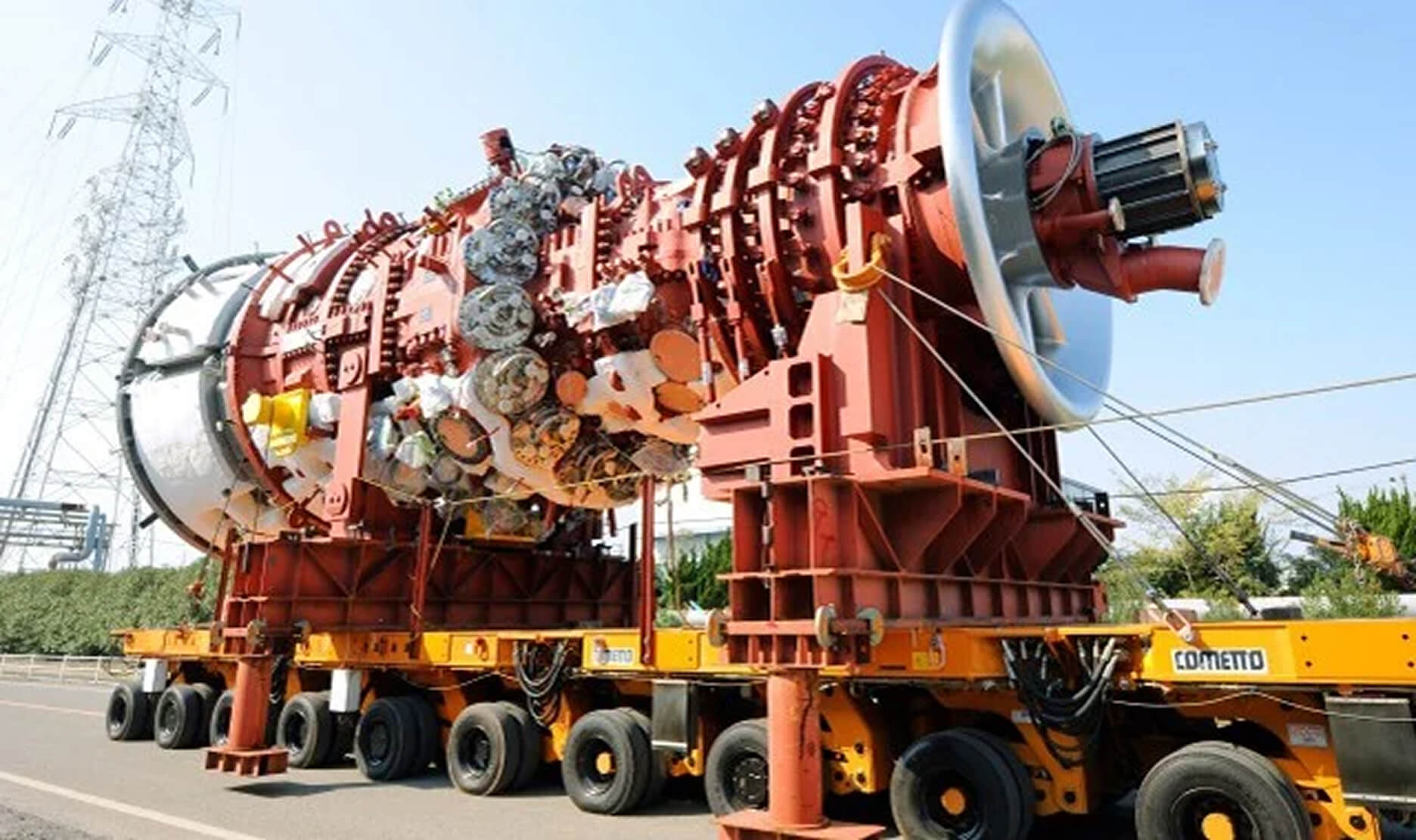
The gas turbine unit is based on the basic structure adopted in the early 1970s that has accumulated a track record of at least 50 years. Its main features are as follows:
- A compressor shaft end drive reduces the effect of thermal expansion on alignment
- A rotor with simple single-shaft two-bearing support
- A rotor structure has bolt-connected discs with the torque pins in the compressor section and CURVIC couplings in the turbine section to ensure stable torque transmission
- An axial flow exhaust structure advantageous in combined cycle plant layouts
- Horizontally split casings that facilitate field removal of the blades with the rotor in place
Explore more
Key Component Technologies
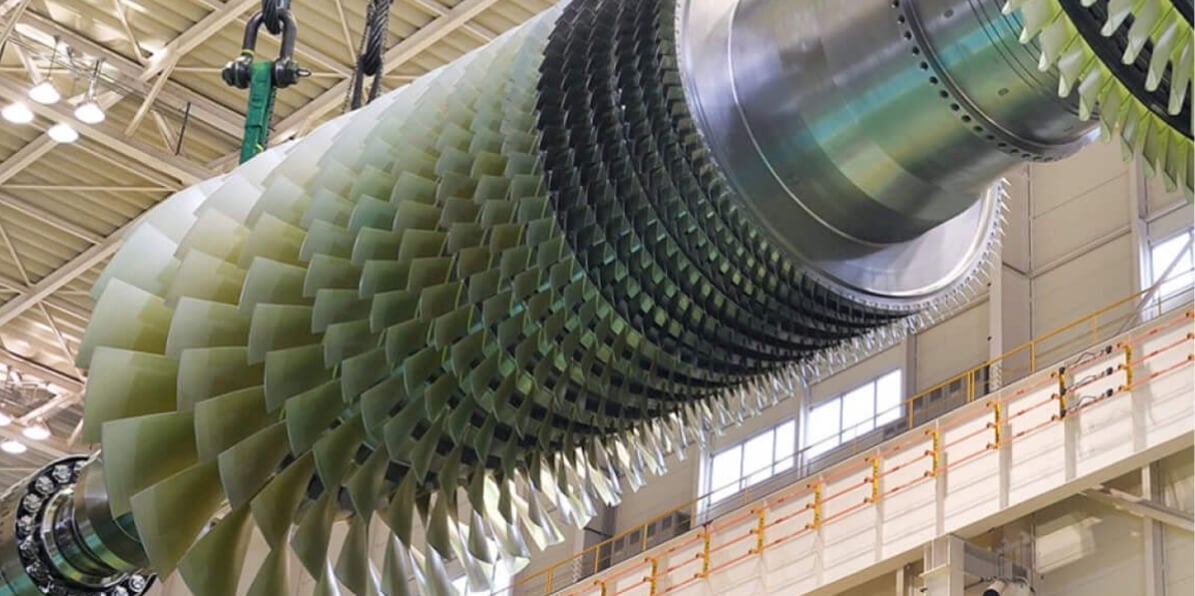
Compressor
Advanced three-dimensional design techniques are used to improve performance while reducing the shockwave loss in the initial stages and frictional loss in the intermediate and final stages. The inlet guide vanes and variable stationary vanes at the first three stages are controlled to ensure stable operation at the start-up and enhanced performance at partial load in combined cycle operation.
Combustor
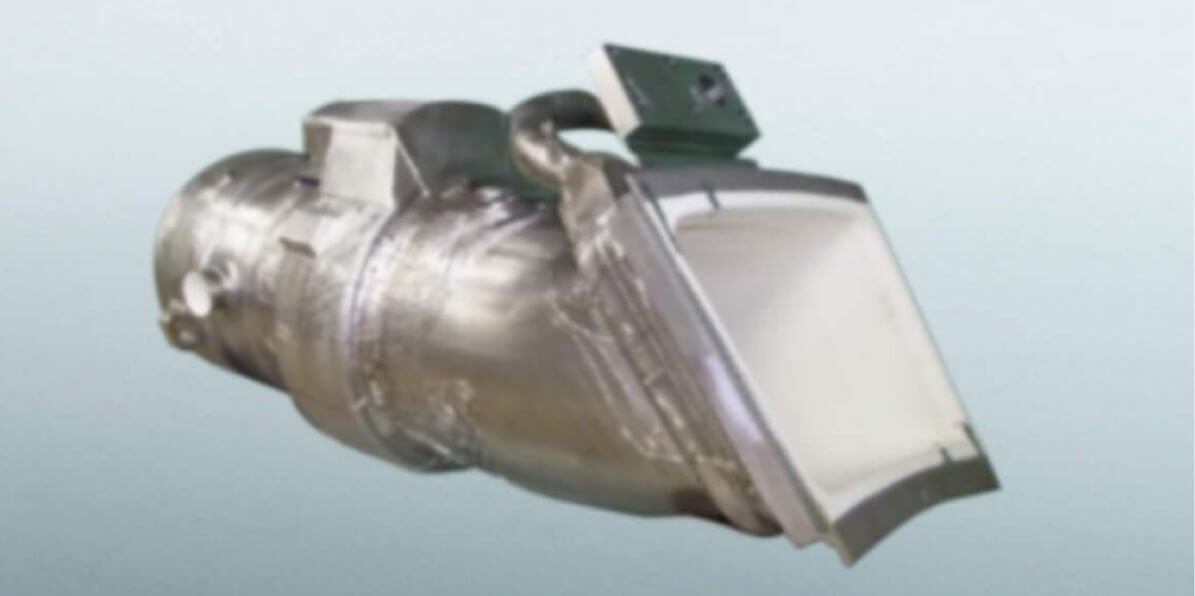
The J Series combustor is based on the steam cooling system proven with the G Series. An improved fuel nozzle is used to help produce a more homogeneous mixture of fuel and air. Despite the rise in turbine inlet temperature, the combustor attains NOx emission concentration equivalent to that of the G Series.
Incorporating air-cooled combustors, the JAC series adds operational flexibility by eliminating any need for steam cooling from the bottoming cycle.
Turbine
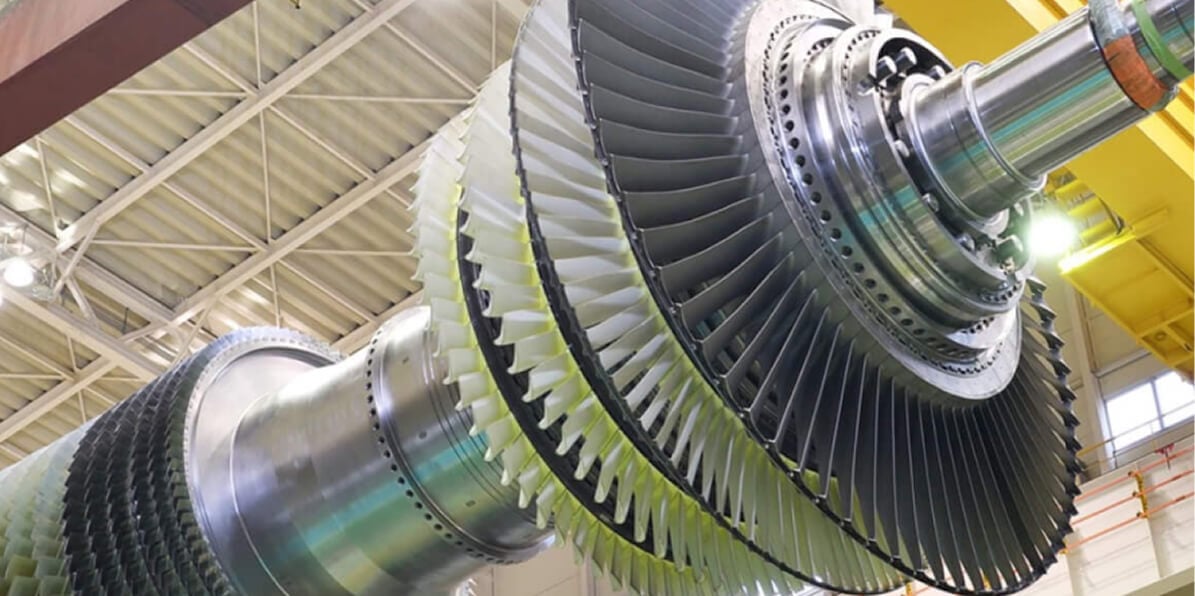
The turbine inlet temperature is 100°C higher than that of the G Series. However, the application of high performance cooling technologies developed in a Japanese national project for the development of 1,700°C class gas turbines and advanced thermal barrier coating (TBC) helps to maintain the metal temperature of the turbine blades at the level of conventional gas turbines.
Explore more
Long-term Validation - T-POINT 2 Proving Ground for Gas Turbine Advancements
Mitsubishi Power has a unique design and validation approach, unlike any other Original Equipment Manufacturer (OEM). The current verification process for the J-series technology takes place at our grid-connected T-Point 2 commercial combined cycle power plant located at Takasago Machinery Works 1 km2 campus 48 km west of Kobe, Japan. In one single location, we house the four key pillars of validation: research and development, design, manufacturing, and full-scale validation. These turbine designs undergo long-term operation of at least 8,000 hours of validation, equivalent to nearly one year of normal operation.
Explore more
Hydrogen Capability
With Mitsubishi Power's hydrogen combustion technology, power plant owners can convert existing gas turbine combined cycle (GTCC) plants to hydrogen co-firing, reducing CO₂ emissions. In the future, it will also be possible to switch to 100% hydrogen combustion with minimal modifications.

Configuration
| M501JAC | ||
|---|---|---|
| Compressor | Number of Stages | 15 |
| Combustor | Number of Cans | 16 |
| Cooling Method | Air Cooled | |
| Turbine | Number of Stages | 4 |
| Rotor | Number of Rotors | 1 |
| Output Shaft | Cold End | |
| Rated Speed | 3,600 rpm | |
| Gas Turbine | Approx. L × W × H | 15.0 × 5.6 × 5.6 m |
| Approx. Weight | 347 ton | |
Simple Cycle Performance
| M501JAC | ||
|---|---|---|
| Frequency | 60 Hz | |
| ISO Base Rating | 453 MW | |
| Efficiency | 44.0 %LHV | |
| LHV Heat Rate | 8,182 kJ/kWh | |
| 7,755 Btu/kWh | ||
| Exhaust Flow | 815 kg/s | |
| 1,685 lb/s | ||
| Exhaust Temperature | 649 °C | |
| 1,193 °F | ||
| Exhaust Emission | NOx | 25 ppm@15%O2 |
| CO | 9 ppm@15%O2 | |
| Turn Down Load | 50 % | |
| Ramp Rate | 42 MW/min | |
| Starting Time | 30 minutes | |
Combined Cycle Performance
| M501JAC | ||
|---|---|---|
| 1 on 1 | Plant Output | 664 MW |
| Plant Efficiency | >64.0 %LHV | |
| 2 on 1 | Plant Output | 1,332 MW |
| Plant Efficiency | >64.2 %LHV | |
Performance Correction Curves
Effects of Compressor Inlet Temperature on Gas Turbine Performance (Typical)
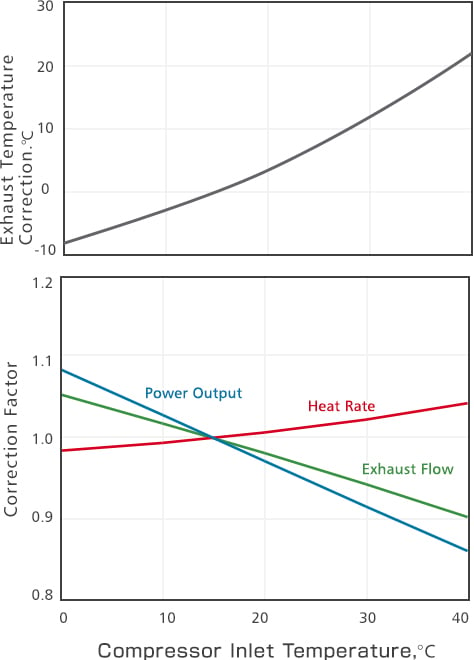
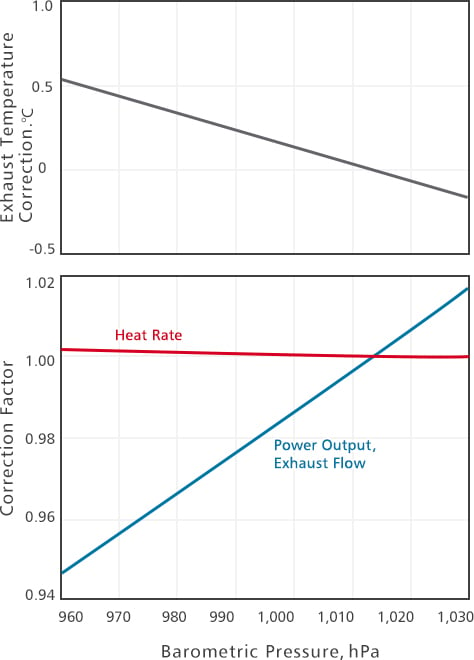
Effects of Barometric Pressure on Gas Turbine Performance (Typical)
Typical Plant Layout - 1 on 1 configuration, single-shaft
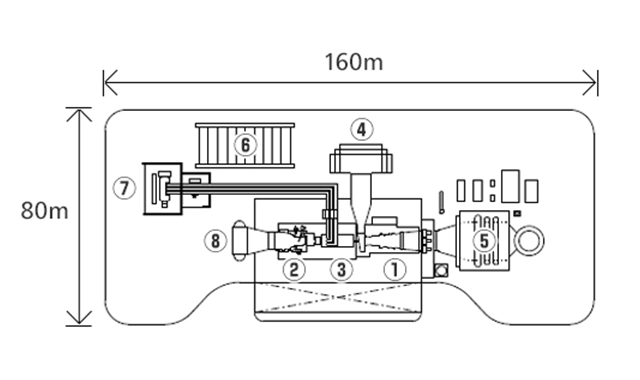
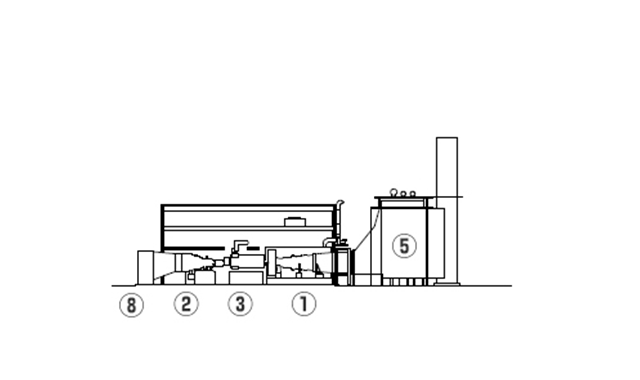
- Gas Turbines
- Steam Turbines
- Generators
- Inlet Air Filter
- Heat Recovery Steam Generator (HRSG)
- Electrical / Control Package
- Main Transformer
- Condenser
Typical Plant Layout - 2 on 1 configuration
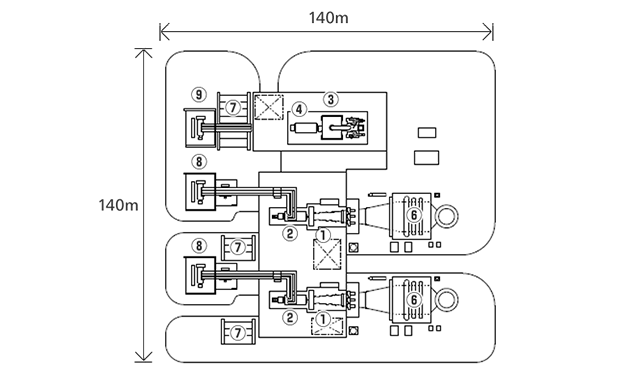
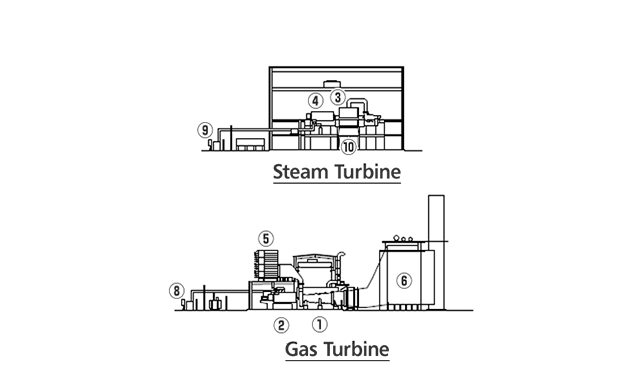
- Gas Turbines
- GT Generator
- Steam Turbines
- ST Generator
- Inlet Air Filter
- Heat Recovery Steam Generator (HRSG)
- Electrical / Control Package
- GT Main Transformer
- ST Main Transformer
- Condenser
Representative Example
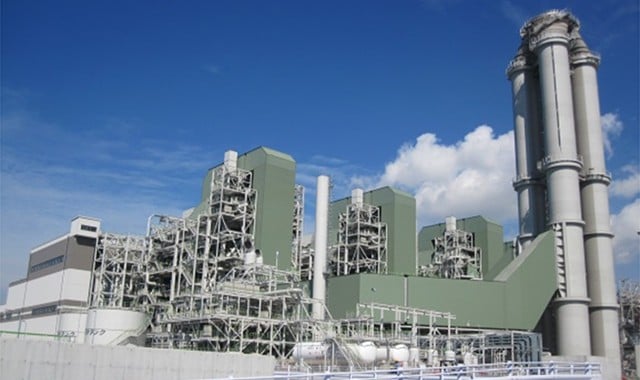
The Kansai Electric Power Co., Inc.
| Country/Region | Japan |
|---|---|
| Plant | Himeji No. 2 Power Station |
| Plant specifications × Qty | Combined cycle × 6 |
| Year of operation | 2013 started |
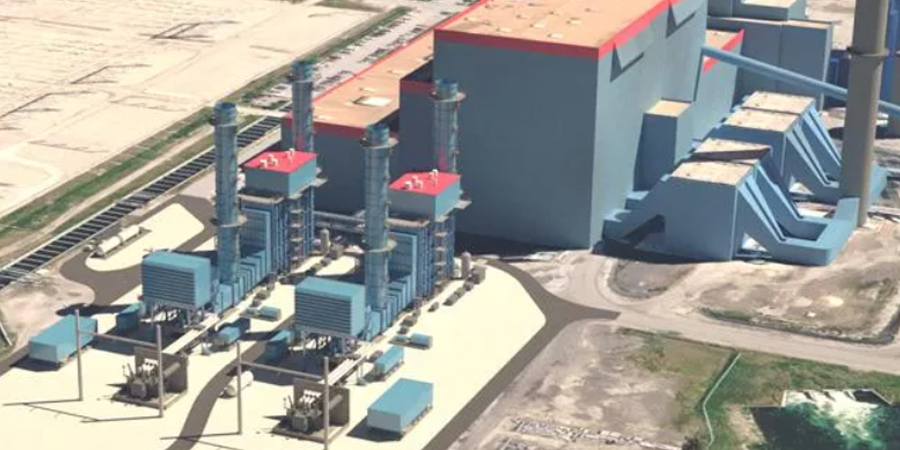
Capital Power Corporation
| Country/Region | Canada |
|---|---|
| Plant | Genesee Generating Station Unit 1 and 2 |
| Plant specifications × Qty | Combined cycle × 2 |
| Year of operation | 2023 started |
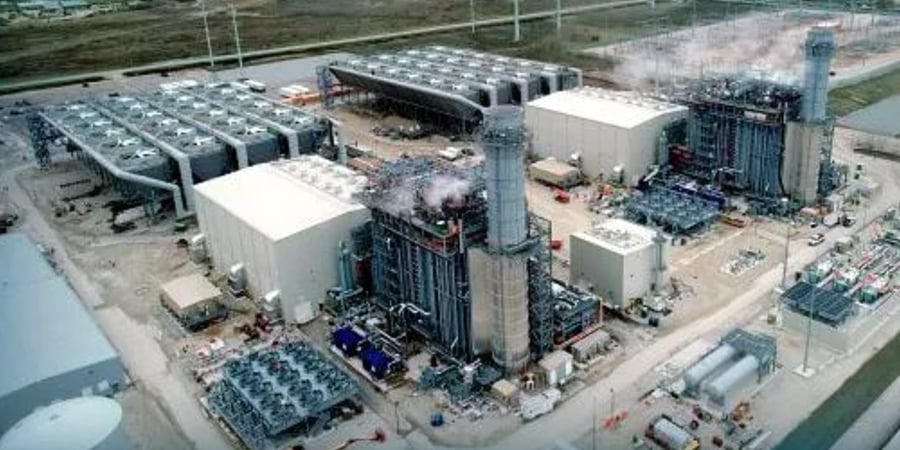
J-POWER USA
| Country/Region | USA |
|---|---|
| Plant | Jackson Generation |
| Plant specifications × Qty | Combined cycle × 2 |
| Year of operation | 2022 started |
Other Delivery Records
| Client / Plant | Country/Region | Year of starting operation | Plant specifications × Qty |
|---|---|---|---|
| Comisión Federal de Electricidad (CFE) / Salamanca | Mexico | 2025 | Combined cycle × 2 |
| Suncor Energy Inc. / Suncor Baseplant complex | Canada | 2025 | Combined cycle × 2 |
| Alabama Power Co. / Barry Power Plant | USA | 2023 | Combined cycle × 1 |
| Power South Energy Cooperative / Lawman Energy Center Unit #1/2 | USA | 2023 | Combined cycle × 1 |
| Mexico Infrastructure Partners / Tamzunchale Ⅱ | Mexico | 2022 | Combined cycle × 1 |
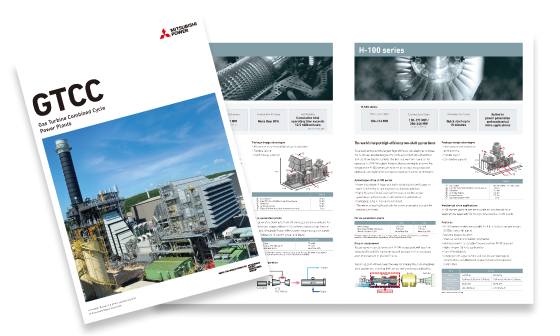
Related Case Studies / News
-
Mitsubishi Power Receives Contract for Large-Scale GTCC Project with 2,800 MW Total Output for Taiwan's Tung Hsiao Power Plant
2025-09-05Press Release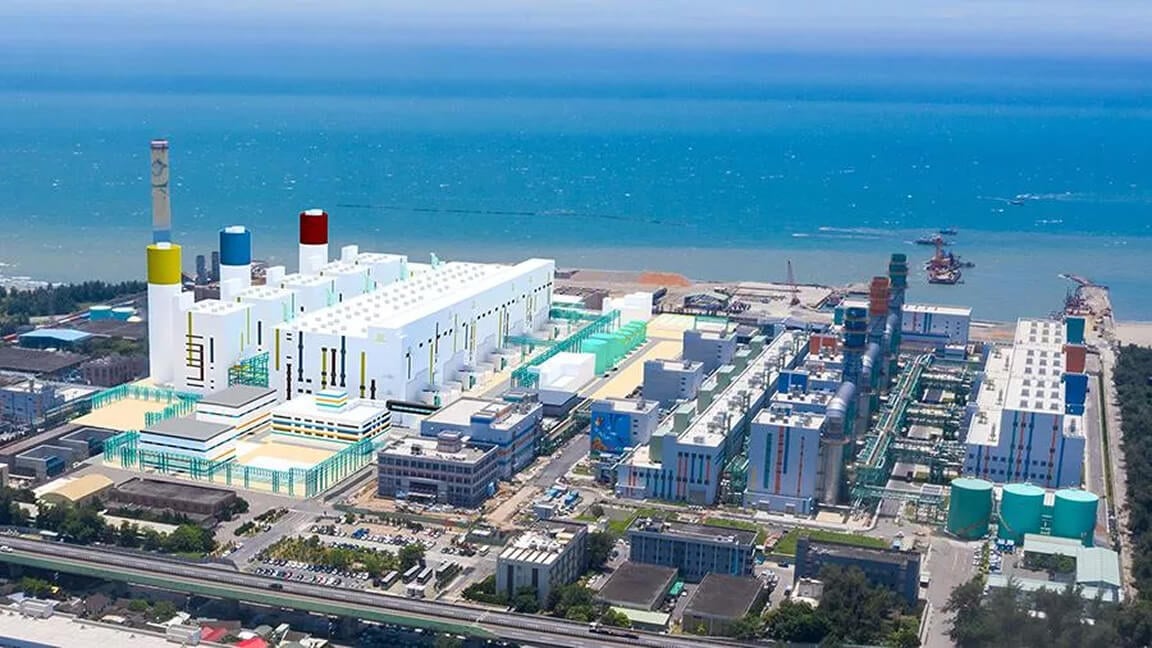
-
Shifting from Coal to Natural Gas, Creating a New Model for Sustainable Power Generation
2021-01-15Case Studies
-
Pursuing Clean and Reliable Power Generation
2017-10-27Case Studies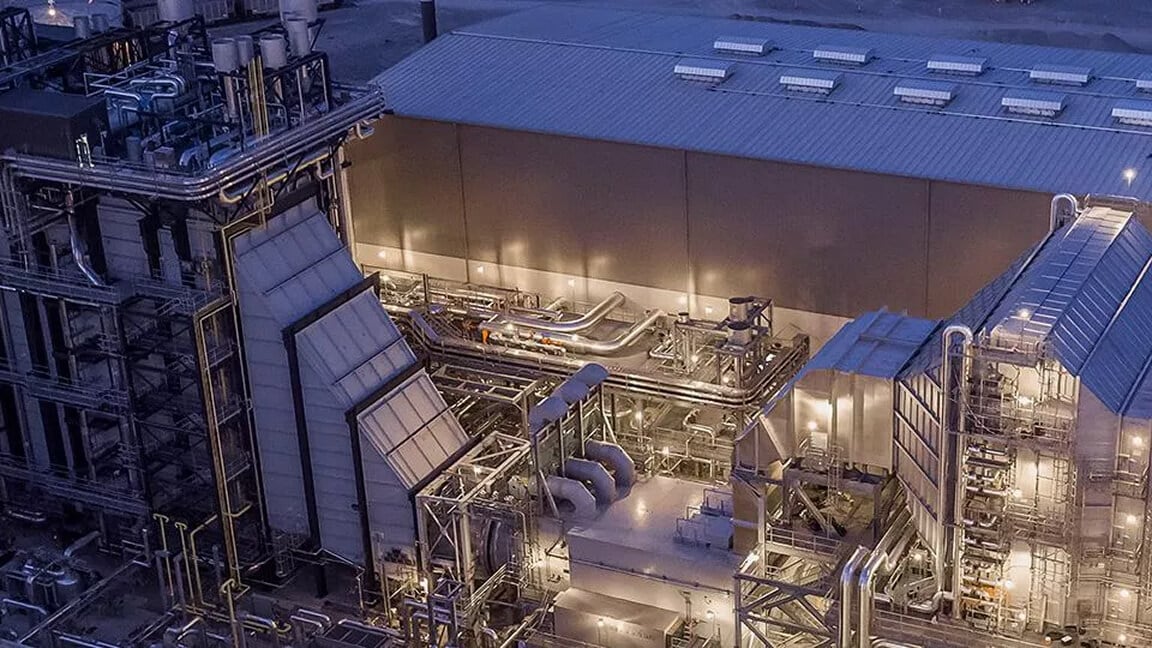
-
Aiming for Clean Power Generation with 100% Hydrogen
2020-03-10Case Studies
Lifecycle & Operation Support Services
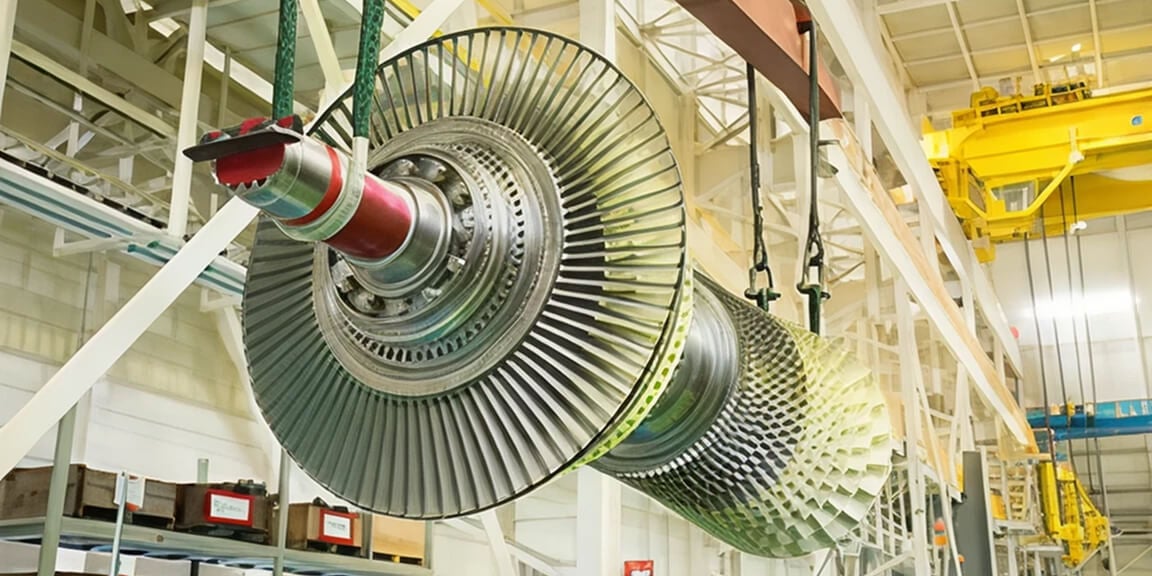 Gas Turbines – ServicesComprehensive lifecycle services that support reliable gas turbine operation.
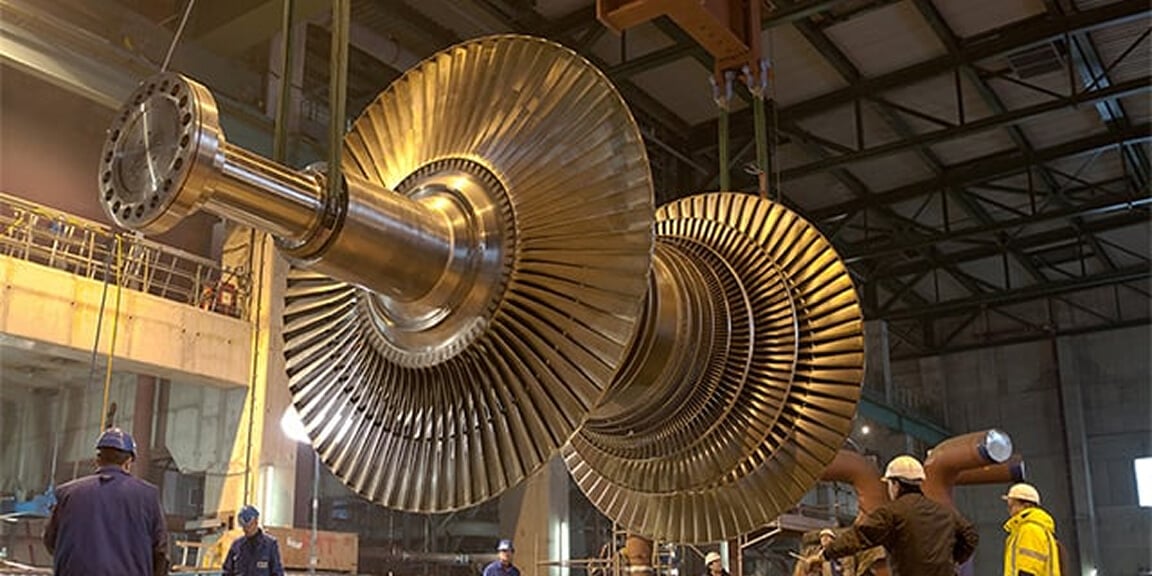 Long Term Service Agreement (LTSA)Predictable maintenance planning and long-term support to maintain stable plant performance.
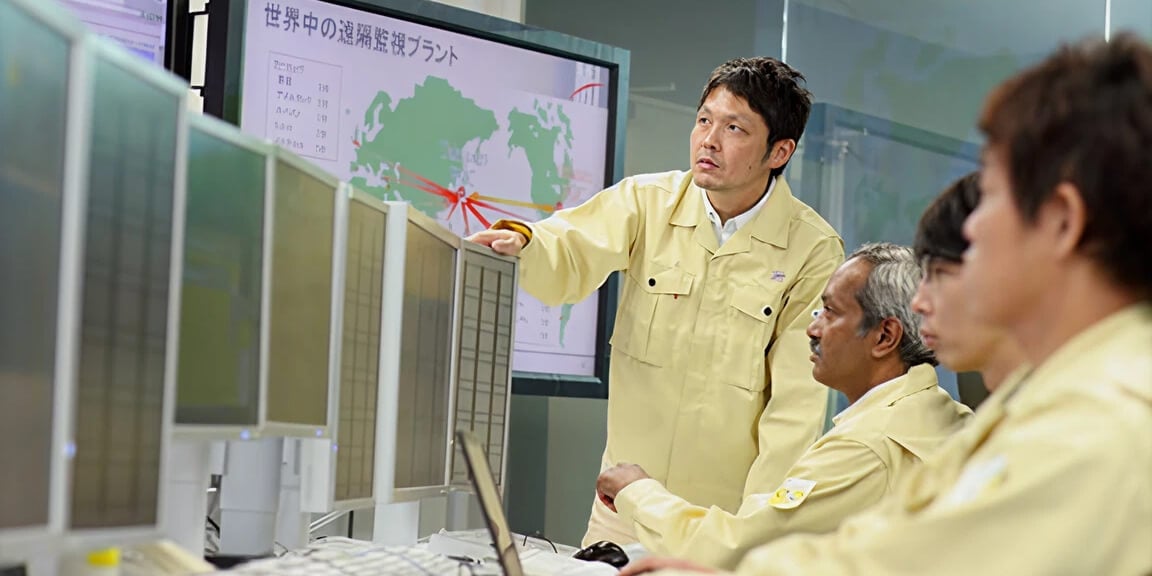
 TOMONI® – Intelligent SolutionsDigital solutions that enhance plant performance, flexibility, and operational efficiency.
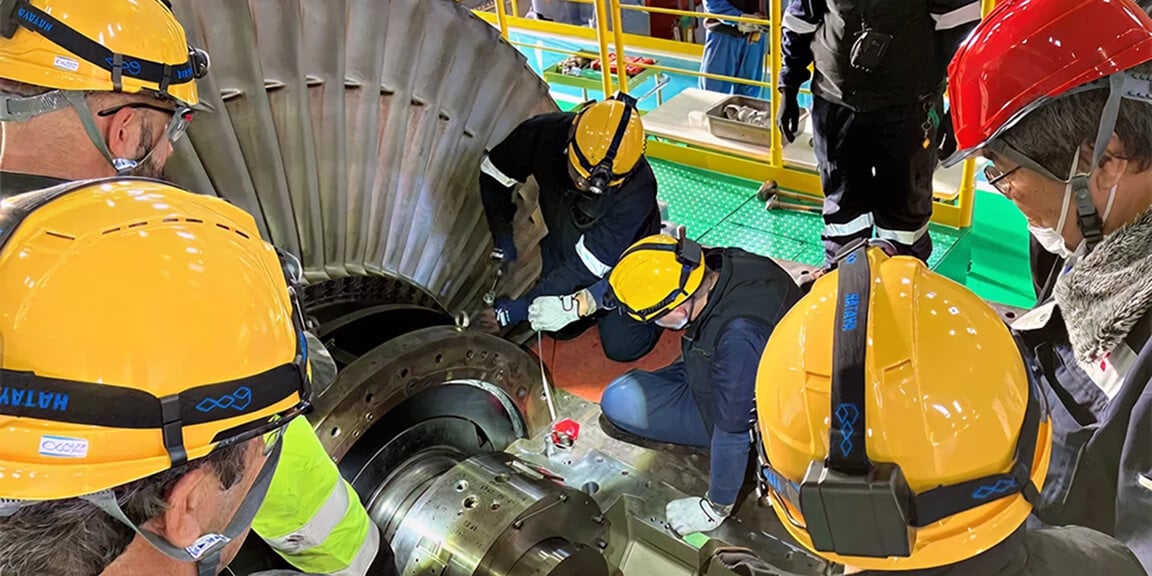
 Support of Operation and MaintenanceWe comprehensively repair aging plants and aim to extend the life of facilities and equipment.
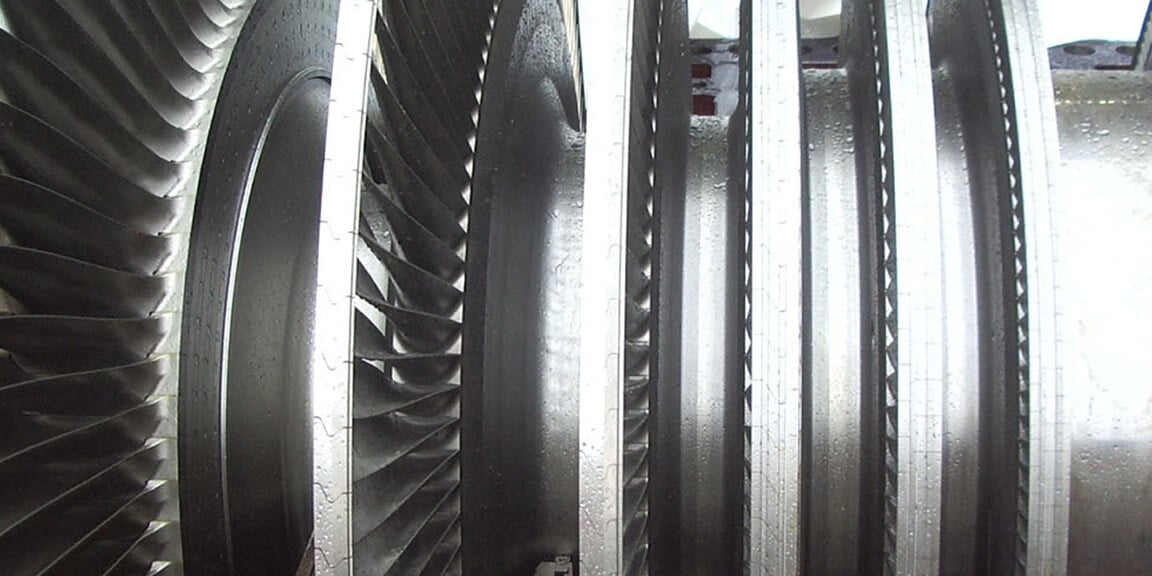
 TrainingSkill-development programs for plant operators and maintenance engineers.
 Steam Turbines – ServicesService solutions for steam turbines used in GTCC combined-cycle plants.
Insights
Explore industry insights related to clean power, decarbonization, and energy transition.
-
What are the most promising technologies for low-carbon hydrogen?
Power & Energy
-
AI in Manufacturing: Productivity, Protection and Maintaining a Human Touch
Power & Energy
-
Energy Explained: What is curtailment and how do we address it?
Power & Energy
-
Clean energy in APAC: balancing net zero, gas and nuclear
Power & Energy
-
From Niche to Necessity: Why CCUS is poised for breakout growth
Power & Energy